

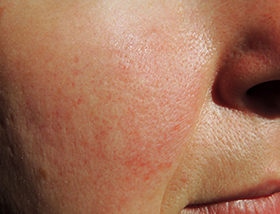
Rosacea is a type of skin inflammation affecting the face. It looks like a permanent red blush on your cheeks which is actually the smaller surface blood vessels under the skin enlarging and causing the redness. Rosacea tends to worsen with age, and many of us get it. Find out why we get it, how we can avoid it, manage it and treat it.
What is Rosacea – what does it look like?
There are several indications you might have Rosacea, these include:
- A permanent redness across your nose and/or cheeks
- Prominent capillaries (blood vessels) that you can see under your skin
- Tiny pimples or bumps on your cheeks, nose and/or chin
- Swollen, enlarged or bulbous nose, usually quite red
- Flushing or hotness (fever-like) of the skin is often associated with rosacea
- Swelling of the blood vessels leading to extended periods of redness
- Sensitive skin
- In some more severe cases, conjunctivitis has also been associated with rosacea.
The symptoms of rosacea can worsen with age and have triggers such as:
- Overheating
- Drinking
- Smoking
- Hot drinks, including coffee and tea
- Spicy foods
- Stress or anxiety
- Sunburn (your skin can burn, but it can also trigger a reaction to the blood vessels underneath if you have rosacea)
- General sensitivity to sunlight and/or temperature
- Unfortunately, it can also be hereditary – you can be more prone to getting it if your family has a history of it.
There are several things suggested to help with it such as antibiotics, however they may take up to 6-12 weeks to clear it however at least a third of these have the rosacea come back. Besides avoiding all triggers for your rosacea (which can be frustrating, near impossible and just plain annoying), One of the most effective ways to manage it is by using only high quality, gentle, non-active products on your face. Several topical creams and medications are available to specifically target the symptoms and causes of rosacea, depending on the “type” of rosacea. These could include medications like metronidazole (anti-bacterial), Ivermectin (anti-parasitic and anti-inflammatory properties) and other non-steroidal anti-inflammatories. Azelaic acid cream may be useful for reducing inflammation and also has skin lightening and anti-bacterial properties. Brimonidine gel may be used to reduce erythema (redness) by constricting the blood vessels in the face.
Vascular laser and/or IPL treatments are beneficial for those that present with persistent telangiectasia.
As with all skin treatments, a regular and ongoing commitment to home skin care and in clinic treatments will produce the best results for managing rosacea.